HabsWorld.net --
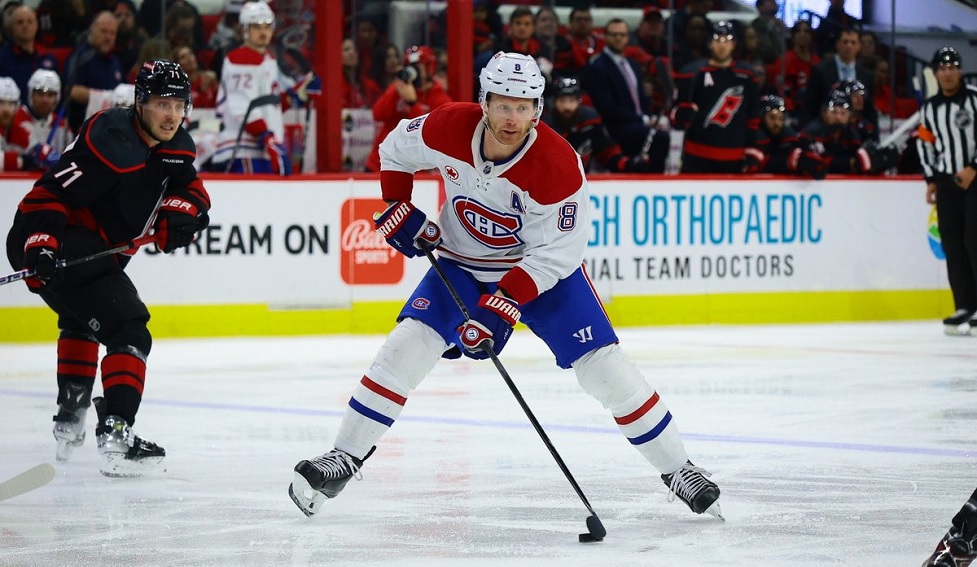
The Habs locked in another core defenceman for the long haul back on Friday when they signed Mike Matheson to a five-year, $30 million extension. Our writers offer up their thoughts on the signing.
Terry Costaris: Montreal’s emerging, young defence NEEDS experienced members to anchor it. Over the next 5 years, at $6M per year, Mike Matheson will significantly help fill the bill.
The Canadiens got themselves a hometown discount here. If Matheson made himself available to the open market this summer, he likely would have gotten $8-9M per. At $6M a year, he will not be a huge cap hit. And on a five-year term, there’s a decent chance that he will still have some chicken left on the bone near the later years of this contract.
Matheson may begin to decline in three years but I’m pretty optimistic that he’ll still be serviceable in years four and five of this deal, when the Habs should be on a Stanley Cup run. In such a scenario, he will be a key locker room presence.
In the meantime, Matheson is outstanding scaffolding allowing Montreal’s budding young defence the time and space to properly mature. So, all in all, I’m very pleased with this deal.
Brian Davis: With the Matheson deal, the Canadiens now have their top four defencemen locked in for at least the next five and a half seasons. On paper, that should be cause for celebration. Yet, as has happened so often before, Matheson’s signing seems to mark him as the next “whipping boy” for critics—ironically, given that he arrived as Jeff Petry’s replacement.
I listen to several podcasts, including Canadiens Connection, which is notably anti-Matheson. Their argument is that his role has shifted toward being a purely defensive defenceman. To me, that expectation is misguided. Matheson doesn’t need to rely on brute force when his strengths lie in poke checking, positioning, and breaking up plays. He’s evolved into a true two-way defenceman—precisely the kind of player teams covet for his ability to handle the puck intelligently both with and without possession. His numbers back this up: he leads the team in time on ice, ranks second in plus/minus, and sits sixth in points.
Matheson will continue to be the Canadiens’ most-used player this season, logging top-10 minutes across the league. With Hutson and Dobson in the mix, his power play time may be limited, but he remains a reliable option if injuries strike. More importantly, his ability to launch forwards on the rush alongside Dobson ensures the team plays fast and remains difficult to match up against. As younger players mature—ideally with Guhle completing a full 82-game season—Matheson can gradually slide down the pairings while still providing stability.
Above all, the coach trusts him. The penalty kill has weakened this season, but that’s due to personnel losses, not Matheson. David Savard was a shot-blocking machine, and replacing that presence is no small task. Matheson has stepped up by blocking lanes, disrupting passes, and battling against opposing power plays with Carrier and Veleno in front of him. They’re not Gainey and Robinson, but Matheson is doing his part.
That’s why I see this deal as a win for the club. It gives management breathing room to shape the blue line over the coming years. Struble, Xhekaj, and Carrier now face real competition to keep their roster spots, especially as Reinbacher and Engstrom develop. Five players competing for two or three slots means hard work will be essential. And in three years, when Matheson’s contract becomes more tradable, the Canadiens will have options.
So credit to the Habs for making this move—and congratulations to Mike Matheson. I’m glad you’re staying around.
Allan Katz: The obvious upside of this deal is impossible to NOT identify. So, finding something fresh to say on this is no easy matter. Yet there are some powerful ideas that this deal pushes forward. The culture of this team, all taking a little less so the team can continue growing, is an incredible affirmation that the Habs are a destination city for the right players. Matheson epitomizes what that means. A solid top four d-man, a home boy, a stabilizing force, a physical specimen, and a veteran who can journey with the kids to the top of the Stanley Cup mountain.
But there is a little extra to this story. I get the impression that Matheson has a future with the Habs beyond his career. His mature presence might influence some of the current youngest Habs to take similar tradeoffs, might encourage other NHLers to want in on the action in Montreal. Ivan Demidov might be a wild card in this story. Nobody can say for sure whether he’s going to buy in when it comes to contract time, but the fact of the matter is as the culture continues to prosper, Ivan might see the way and participate likewise. It’s an exciting time to be a Hab fan and Matheson’s decision to dive in increases the chances that a few parades might be somewhere in the near future.
Brian La Rose: Like pretty much everyone else, I think the cap hit on this contract is better than expected. Of course, it also comes with a longer term than is probably ideal. That’s the trade-off for the extra shorter-term cap flexibility so we’ll see how Montreal puts that to use this coming summer.
This signing means that Montreal’s top four is signed through at least 2030-31. On the surface, that’s a good thing to have a bunch of core players locked up. But this back end, though improved this season, still isn’t particularly good despite the fact that it’s about to become one of the most expensive back ends in the NHL. Yes, there’s hope for Lane Hutson and Kaiden Guhle to improve – and maybe even Noah Dobson a bit – although some of that will be mitigated by Matheson being on the wrong side of his prime. Is this the defensive nucleus of a Cup contender? I’m honestly not sure although David Reinbacher developing into the player the Habs think he can be could also play a role.
I’m also wondering if the Habs have too many of the same attributes on the back end. Dobson, Hutson, and Matheson are all strong-skating puck-movers. Even Guhle is pretty mobile with some puck skills. But in the playoffs, we know that those types of defenders can sometimes be one-upped by more physical players. Do they have the right mix? Again, I’m not sure. Trading and not re-signing Matheson could have given them a chance to shake up the balance a bit.
Don’t get me wrong, it’s a good deal value-wise and I completely understand why Montreal did it. If you have a player willing to leave money on the table in a salary cap world, take it and figure out the rest after that. I’m a bit curious as to what the next step defensively is going to be as I don’t know if this top four is going to have enough complementary skill-sets to help take the Canadiens to the next level. With this group signed, they’ll have plenty of time to figure out what that next step is going to be.
Kevin Leveille: Matheson has, at times fairly and other times unfairly, been a lightning rod for criticism for much of the last two seasons. Unlike many before him, he took this criticism in stride, knowing that his play was far better than the outside noise was suggesting. So far this season, the noise has been minimal because Matheson has been so good. He’s playing fewer minutes at even strength as his role has evolved as the team’s premier penalty killer. This is in part because the Habs feature a deeper blue line, and frankly, the results speak for themselves. He’s built excellent chemistry with newcomer Noah Dobson as the pair faces the most difficult opposition night in, night out. Not only did Matheson face the negative noise, but he asked to stay in Montreal in the middle of it and now has put cards on the table in what has to be seen as a hometown discount by Matheson to stay in Montreal. Not sure what else he can possibly do to prove why he should be trusted moving forward.
Now onto the contract. This is another masterful, masterful contract negotiation as the Habs’ GM Kent Hughes once again checks one off the board long-term while giving himself a ton of wiggle room to swing for the fences to fill the void up the middle. With Guhle and Reinbacher seemingly injury-prone, locking up a legitimate top option for the next three years is awesome. To do so under contract value is even better. At five years and a $6M AAV, some would argue that the term is a bit much, but considering the structure of the money in the deal (most of it is paid in first three seasons), and the structure of the NMC-NTC in the deal (again mostly focused on first three seasons), this becomes an easily tradeable contract in the final two seasons should the Habs feel the need to go down that path.
Sign a player in a position of need, check.
Find a player who wants to be in Montreal, check.
Sign him to a team-friendly contract, check.
Make said contract movable when it might sour on the team if the team gets to its destination and is competitive when the player declines, check.
I don’t understand how any Habs fan can realistically have an issue with this contract. Huge win for the Canadiens.
Peter Longo: I have to admit, I wasn’t the biggest Matheson fan during his first three seasons in Montreal. As the supposed top defenceman on the team, he was a minus player with constant giveaways that regularly cost the team wins. I thought he’d be better off playing on the second pairing because he couldn’t handle the top opposition and/or minutes. But his play this season is making me reconsider this assessment. With a strong partner like Dobson and with Hutson taking over the power play minutes, Matheson’s play this season is nothing short of impressive. He is playing like a true #1 defenceman.
Gone are the giveaways and poor decisions, and instead, fans are treated to perfect outlet passes and smart defensive plays against the top opposition. He’s amongst the NHL leaders in plus/minus, and while he isn’t getting power play time, he’s still on pace for over 50 points. Perhaps during the first 3 seasons, Matheson was simply trying his best to do everything (offence, defence, +25 minutes/game) without the necessary support. If the current version of Matheson remains for the next five years, the contract is going to look great!
The only hesitation is that Matheson would have been a great trade asset to acquire a much more important top-six centre. With their top four defencemen now signed to long-term contracts and having a surplus of NHL defencemen and prospects, perhaps this signing now allows the team to move Carrier, Reinbacher, or Engstrom as part of a package to fill this void.
Bottom line: While I like Matheson’s contract, it doesn’t move the needle towards making the team more competitive.
Richard Roy: Looking at just the player, this was clearly a Black Friday Deal for the Habs. Matheson currently sits among the elite in the NHL in many advanced stats, comparable to players such as Rasmus Dahlin and Adam Fox in terms of ice time, Miro Heiskanen and Jake Sanderson in points, and is the ninth defenceman in the league in goal differential with +14. All these players have an AAV higher than Matheson, ranging between $8.05M AAV to $11.0M AAV. In line with the Habs culture, Matheson took a significant pay cut to stay in Montreal. In a post-game interview in Vegas, Matheson admitted his personal life as a Montreal native with his entire family, including young kids in school, made this decision much easier for him.
According to Marc-Antoine Godin on the Basu-Godin Notebook, the negotiations between the Matheson clan and the team were postponed in September to let the team finalize negotiations with Lane Hutson. They resumed late October and Hughes was looking for a three-year deal with the objective of adding one or two years after that. Matheson wanted six years. They finally agreed to a five-year deal.
Matheson wanted security (i.e. term, upfront bonus, no-trade clause) while the team wanted a low AAV and a reasonable term. What this resulted in was Matheson giving up at least $2M per season and potentially an extra year for a total of $18M in exchange for two more years than what the Habs were ready to offer, and a no-trade clause for the first three years (plus a 14-club no-trade in year four, and a five-club no-trade in year five). Matheson, apart from his entry-level contract, will have a career earning of $69M by the end of the new contract.
As for the impact on the team, it does create a potential logjam that Hughes and Gorton will need to manage. For now, Matheson and Dobson are the uncontested top defensive pairing. Injuries and transactions aside, the team has Guhle-Hutson as the second pairing, and Carrier-Xhekaj-Struble as the bottom pair options. In Laval, Reinbacher and Engstrom are knocking on the NHL door. Both are fluid puck-moving defencemen similar in style to Matheson. Both prospects are seen as future top-four NHLers. When that happens remains to be seen, but they can’t be expected to be valid candidates to replace Matheson for at least another two or three years. Both Guhle and Reinbacher have yet to demonstrate that they can play more than 50% of a season consistently so it makes sense to see them as a single shared spot for now, until their luck/health suggests otherwise. Assuming that Reinbacher takes the next step and becomes a valid top-pairing player in, say, three years, I see no issue putting Matheson on the third pairing and being the guy to replace any injuries in the top four whenever that happens. That leaves Engstrom, Struble, Xhekaj, and Carrier to share a single spot, with Engstrom being undervalued in that role.
That only means a lot of options and trade chips for Hughes. I understand that fans are becoming restless about Reinbacher. In his draft year in 2022, he was considered a potential future Brock Faber. A lot of teams were calling Hughes at the draft and most were not asking about a potential Matvei Michkov pick by the Habs, but about Reinbacher. Currently, Reinbacher’s value is probably at its lowest point. With Matheson locked in to fill Reinbacher’s future role for the next three years, the Habs have all the time (and less pressure) they need to develop Reinbacher and see if he becomes the player they had envisaged in 2022.
Norm Szcyrek: Based on the resurgence of Matheson this season, this contract extension looks fair to me. Mike has improved since being paired with Noah Dobson to start this season, and they have formed a successful shutdown pairing. Matheson plays an important role on the penalty kill and yet still contributes offensively. I don’t know how they would have replaced him if he had left in the next offseason.
Dave Woodward: Matheson’s signing represents a hometown discount, at least in terms of the cap hit. With the salary cap rising, it’s difficult to foresee a scenario, absent injury problems, where this deal is not below market value for at least the first three years of the contract. With Matheson turning 32 before the deal kicks in, the last few years of the term may deliver less value but that is almost always the case when signing players who are eligible for free agency.
Some pundits will no doubt question the wisdom of signing Matheson long-term with David Reinbacher, Adam Engstrom, and others knocking on the door. Matheson may well be a third-pairing defenceman early in the term. Even if that occurs, with injuries and the wear and tear of a long season and the grind of extended playoff runs, a skilled defender who can play on all three pairings as well as kill penalties and quarterback the power play will remain a valuable player for the team.
With the Hutson, Evans, and Matheson signings, the Canadiens seem to have become a team where its players are prepared to take a salary discount to remain part of the group and what they are building. All the prior regime’s excuses about the market’s media pressure, taxes, language issues and weather may well have been overblown. Maybe athletes just want to win and be treated well by management after all.