
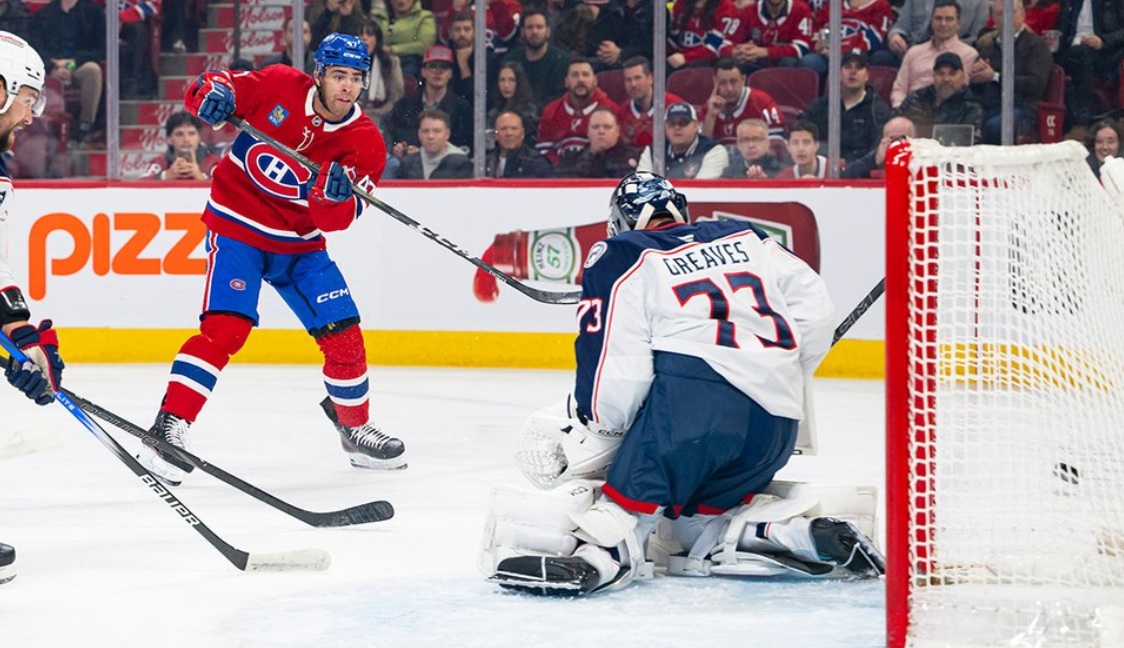
The Habs pulled off a bit of a surprising move last week, sending Jayden Struble to Nashville. Having had some time to ponder the swap, our writers offer up their thoughts on the deal.
Terry Costaris: I like Struble and wish him nothing but success going forward. I’m sad to see him go. Unfortunately, Struble was a victim of a highly competitive situation in Montreal where he pulled out the short straw.
Nashville is getting themselves a bottom pairing NHLer on a good team with a bit of upside. In Montreal, Struble added necessary grit to the Habs’ defence but I don’t think of him as a game changer- either now or in the future.
The Canadiens had to decide between him, Adam Engstrom, and Arber Xhekaj. If I had to decide between Struble and the “Jackhammer,” I would have to select the latter. I see more upside. As for Engstrom, he brings quality defence and offense but lacks Struble’s edge. Come playoff time, this might work against the Canadiens.
Overall, this was a fair deal but we should remember that seven years ago, Struble was a second-round draft pick (46th overall) and now, he’s been traded for a likely lower second-round pick (from Vegas) which means that his value has not really appreciated. This is unfortunate given that Montreal has poured millions into his development. Such is the cost of the business in sports. A lot of money gets wasted in the production of a quality roster.
Having said this, perhaps the upcoming second-round pick may be put to alternative good use. For example, given how the Canadiens love to trade up on draft day, having an additional second-rounder on hand is valuable currency for such transactions.
Likewise, Montreal may use this pick to acquire another Phillip Danault-like player. Basically, they now have some currency to use from US Thanksgiving onwards, when faltering teams can read the tea leaves and start shedding veterans if they decide to undergo either a rebuild or reset.
The bottom line is that Montreal got some value in this trade. They are a team brimming with talented players and need to provide space for those who best fit their long-term plans. They simply can’t keep all of their bevy of young talents. They need to constantly stoke the fire if they hope to be a contender for a decade plus and this, in general, is the way to do so.
Brian Davis: It was pretty obvious something had to give as the depth chart on defence was starting to resemble Long John Silver’s legs. Way too much on one side and not enough on the other.
Of the defencemen to go, I’m glad it’s Struble, as I think he got too comfortable with the Habs. Having signed pretty much straight away for a low two-year deal, it did suggest he knew he couldn’t get more. But also that the club didn’t see him as being needed long term. Sadly, it always pointed towards a trade, arguably more so than Xhekaj. A second to replace the second they used on Struble is a good return for the third pair guy.
What this also does is send a message: don’t settle in your spot; if you don’t perform, we will move you. Hopefully a warning for all the others on the roster who are coasting along (hello, Mr. Dach). But also some of the senior players who just slouched out of the gate. A wake-up call, I suppose.
Final thought, is there something else brewing? The Canadiens have gained a little cap space as well as draft capital. Is this setting the platform for another move in the coming weeks?
Allan Katz: The Struble trade gives us an insight into certain issues with the Habs. The most obvious is the surplus of defencemen in the organization. The problem is that not all of the rearguards have developed to their potential. The Habs have a surplus of talent that has not developed into top-four status.
From the day Struble arrived, he was recognized as a unique physical specimen. This is not an opinion; his testing went through the roof and presented the possibility that he would be a tower of power. Like our beloved Sheriff (Xhekaj), Jayden has not risen above a so-called five/six/seven defensive talent. One of the reasons neither has done so might be that they have not played enough. If the team had only one of them, it is possible the player might be ahead of where they are today. Sadly for the fans, Xhekaj might have a similar fate awaiting him because Jayden’s departure has not cleared the roster enough due to Engstrom’s arrival and David Reinbacher, Bryce Pickford, and Luke Mittelstadt waiting in the wings (aka Laval).
I suspect Struble will flourish in Nashville and not replicate the difficult journey Jordan Harris has had. So, to Nashville, I give this trade a solid grade A.
Montreal had no choice but to make this trade. By acquiring an expected late second-round pick, they have probably done as well as they could. Yes, they are a decent drafting team and might nab themselves an NHL talent, but the odds are not on their side. What Montreal obtained with this trade is a trade chip, a roster spot for Engstrom, and a few extra buckeroos saved which might help in a future deal. This is probably the best they could do, but not what I would frame as ideal. So, to Montreal, I give this trade a solid grade B.
Brian La Rose: These types of deals are the byproduct of having a strong farm system. Eventually, something has to give. The organization has been talking up Engstrom since the start of training camp; they didn’t want him going back to Laval. And carrying eight healthy defenders wasn’t a viable long-term option either. If they were deep in LTIR, that’s one thing, but they’re operating as a team with cap space. The goal is to accrue a bunch of room for in-season moves (or to cover for bonuses) so having two healthy scratches on the back end each game wasn’t going to work.
It has been reported since the trade was made that Nashville GM Chris MacFarland had coveted Struble going back to his draft year, allowing Montreal to get a return that’s probably a bit better than I expected. Early in a season, the trade market for depth defenders (which is where Struble is) typically isn’t that high.
We saw Harris get forced out from the depth behind him in a deal that worked out pretty well for the Habs despite Patrik Laine’s injuries; the second-round pick turned into Danault. We saw Johnathan Kovacevic get forced out as well. That one worked out a lot better for New Jersey than Montreal, by the way. This is another one of those deals. At least management is getting out in front of it over having a player sit and their trade value deteriorate, the fate that met players like Jarred Tinordi and Greg Pateryn in the past. You could even throw Justin Barron on that list, though he was dealt for a now player (Alexandre Carrier) over a draft pick but it was a similar idea, move him before his value drops. He was claimed off waivers last month by St. Louis, in case anyone’s curious.
It’s probably not the last one of these coming down the pipeline at some point either. We know there’s trade interest in Xhekaj and Engstrom and with the prospects in the system (I’ll add Bogdan Konyushkov to the list), someone else will be getting pushed out. Other teams know that now which makes getting maximum value harder than it might seem. Failing that, fair value is a reasonable outcome and I think they got that here.
Peter Longo: I’m not happy that Struble was moved, as he is a solid third-pairing defenceman with size and mobility, battled hard in the corners, and has a very reasonable cap hit. There’s a lot to like about Struble. Having said that, since the Matheson extension was signed, moving a defenceman was inevitable. And if this means that Xhekaj stays with the team long term and is allowed to develop into strong third-pairing role, then this was the right decision for the team.
Getting a second-round pick is an equitable return while clearing a contract and associated cap space.
It’ll be interesting to see if this is a trigger for more changes on the blueline or if additional trades on defence are still to come. The current pairings don’t feel right and early results this season aren’t encouraging. Perhaps with Kaiden Guhle back, it’ll shake up the top four.
Norm Szcyrek: Something had to give between Struble and Xhekaj. I believe Arber was playing a steady defensive game to start this season, edging out Struble. Engstrom has better offensive abilities than both but just needs time in the NHL. He is also comfortable playing on the right side, which is something neither Struble nor Xhekaj could show competence at. Arber’s toughness gave him an edge too. With Reinbacher in the AHL, it seems the Habs management did well to secure a late second-round pick for him.
James Turner: Not a surprising move given Guhle’s return. I’m not sure if I fully buy the sentiment that the move is a vote of confidence for Xhekaj. There is no denying that Xhekaj has played well thus far this season, but I just think this came down to a numbers game.
If I allow myself to wear my tinfoil hat for a moment, one might see this move as an olive branch between the two clubs. Perhaps a sign of good faith for a potentially bigger trade this season. It’s too early in the season to tell whether Nashville will be looking to buy or sell at the trade deadline. If they struggle, Ryan O’ Reilly or Matthew Wood could be on the market. Both would be welcome additions to a Montreal playoff squad.
Dave Woodward: The Struble deal is not surprising. The number of left-handed defenders (and young rearguards generally) left the Canadiens with little option other than to make a trade at some point. Engstrom and Reinbacher are knocking on the door and Guhle returned from injury. Struble had a rough camp and, while he is a physical defenceman, Xhekaj’s innate penchant for violence is a skill set that is of considerable value come Spring. And unlike some of the Habs’ regulars, Arber has looked relatively solid back there so far this season. Either Xhekaj or Struble had to be dealt at some point. For the above reasons, Struble was the odd man out.
The return of Guhle no doubt influenced the timing of the deal. With Guhle back in the lineup, Struble would have been sitting in the press box often and was not waiver-exempt. Ideally, the deal might have waited for other teams to sustain injuries where their desperation may have extracted a better return. On the other hand, Struble’s market value would not have benefited from being a healthy scratch for an extended period of time.
In this scribbler’s view, Struble is a solid if unspectacular third-pairing NHL defenceman who does have a physical presence and can drop the gloves if needed. That is a valuable skill set. Trading Struble for a (likely late) second-round pick seems a little underwhelming, particularly when he remains under team control and has a reasonable cap hit.
A trade had to happen but it didn’t have to happen right now. Engstrom could have been sent down for a while and Arber and Struble could have continued to platoon until injuries struck another team. At that point, a better return for Struble might have been available. While Hughes has made clear that he is far more adept at negotiating than this armchair pundit, I question the timing of the trade and the return. I fully expect that Struble will be a durable bottom-pairing NHL defenceman for a long time. The Canadiens should have received more in return.